admin@sgacontractors.com




 870-278-5356
Metal Roofing in Jonesboro: What to Know in 2026
Drive through a few neighborhoods around Jonesboro and you will see plenty of homes with metal roofs. Some are dark gray, some are bright white, and some are a shade of green or brown that blends right in with the trees. If you are thinking about metal roofing in Jonesboro for your own home this year, you have probably wondered what a metal roof would involve.
Most homeowners start with the same handful of questions. How is a metal roof built? Is it worth the extra cost over shingles? Will it hold up to our storms and our summers? And what should happen on installation day?
This 2026 guide answers those questions. It covers how a standing seam system works, how metal compares to shingles side by side, what a proper installation looks like, and the questions Jonesboro homeowners ask most before they decide.
Quick Answers: Metal Roofing in Jonesboro
- Standing seam is a common choice for metal roofs on homes. Its fasteners sit under the seams, out of the weather.
- Metal costs more upfront than shingles, and it typically lasts much longer when installed well.
- Lighter and reflective metal finishes stay cooler in the sun, which matters in an Arkansas summer.
- Large hail can dent metal, but the dents are often cosmetic.
- Residential standing seam is commonly made in 24 or 26 gauge. The lower the number, the thicker the metal.
- Whether metal can go over your old roof depends on an inspection of the wood underneath.
- Trim, valleys, and flashing decide how well a metal roof keeps water out.
How a Standing Seam Metal Roof Works
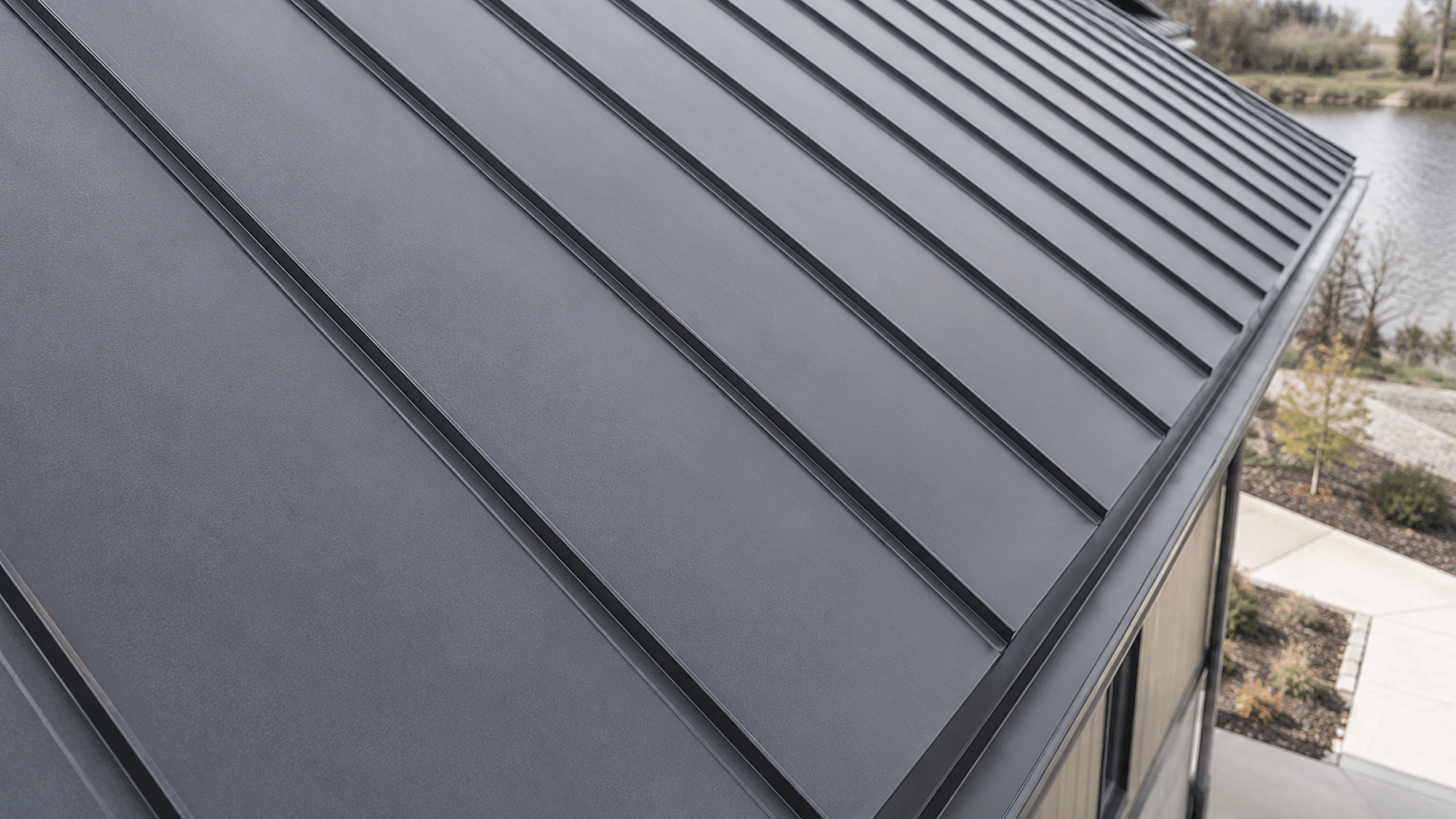
Standing seam gets its name from the seams themselves. Long metal panels run from the peak of the roof down to the edge, and the sides of each panel rise up and lock into the panel next to it. Each panel is one continuous piece from top to bottom, so there are no horizontal seams for water to sit in.
A standing seam roof is more than panels, though. It is a full system, and every part has a job.
The Panels
The panels are the main surface of the roof. The clips or fasteners that hold them down sit under the seams, out of the weather. That matters because exposed screws are one of the most common places for a metal roof to start leaking over time.
The Trim and Flashing
The trim pieces finish the roof and keep water out at the edges. This includes the rake trim along the sloped sides, the drip edge at the bottom edge, the ridge cap along the peak, end caps, and the metal in the valleys where two roof slopes meet. Flashing seals the spots where the roof meets a wall, a chimney, or a vent pipe.
Here is our honest opinion. Color is the easiest choice you will make on a metal roof. The trim and valleys are the choices that decide how well it keeps water out, and they deserve more of your attention.
What Sits Underneath
Below the panels is a layer called underlayment, which acts as a backup barrier if water ever gets past the metal. Below that is the wood underneath your roof that everything attaches to. A metal roof is only as solid as what it is attached to, which is why that wood gets checked before anything new goes on.
Metal Roofing vs. Shingles: A Side-by-Side Comparison
Most Jonesboro homeowners weighing metal are comparing three options: standing seam metal, exposed fastener metal panels, and architectural shingles. Here is how they compare on the points that matter most for a home in Northeast Arkansas.
| Standing Seam Metal | Exposed Fastener Metal Panels | Architectural Shingles | |
|---|---|---|---|
| How it is held down | Clips or fasteners hidden under raised seams | Screws drilled through the face of the panel | Nails covered by the shingle above |
| Spots where leaks usually start | Few, since fasteners stay out of the weather | Screw holes, as rubber washers age and loosen | Lifted, cracked, or missing shingles |
| Summer heat | Reflects sunlight well in lighter or reflective finishes | Reflects sunlight well in lighter or reflective finishes | Absorbs more heat, especially darker colors |
| Wind | Panels lock together along every seam | Holds well while screws stay tight | Rated for wind, but edges can lift with age |
| Hail | Can dent in large hail; dents are often cosmetic | Can dent in large hail; dents are often cosmetic | Can crack or lose shingle grit |
| Upkeep | Low | Moderate, since screws need periodic checks | Moderate, with shingle repairs over time |
| Upfront cost | Highest of the three | Lower than standing seam | Lowest of the three |
| How long it lasts | Longest of the three when installed well | Long, with screw maintenance | Shortest of the three |
| Look | Clean vertical lines, modern | Visible rows of screws, simpler look | Traditional, dimensional |
If you plan to stay in your home for many years, standing seam usually makes the most sense of the three. The higher upfront cost is spread over a longer life and fewer repairs. If budget is the main concern, architectural shingles remain a solid choice. Exposed fastener panels sit in between, and they work best when the homeowner is ready to check the screws regularly.
Not sure which one fits your home? Contact our team to learn more.
Why Metal Roofing Fits Jonesboro Weather
Weather in Northeast Arkansas is hard on roofs. Spring brings heavy rain and strong wind. Summer brings long stretches of heat and sun. Fall and winter bring more storms and swings in temperature.
Metal holds up well to that mix. The long panels and locked seams shed water quickly during heavy rain, and a properly fastened standing seam roof resists wind better than loose or aging shingles.
Heat matters here more than it would up north. According to ENERGY STAR, reflective cool roofs work best in hot, sunny climates like the Southern U.S., where they can help reduce how hard your air conditioner works during the summer.
What Metal Roof Installation Looks Like
A good metal roof installation follows a clear order. Knowing the steps helps you understand what you are paying for.
- Inspection and measuring. The contractor checks the wood underneath, looks at ventilation, and measures every section. Panels are cut to length for each section, so accurate measurements matter more with metal than with shingles.
- Panels, color, and finish. You choose a panel color and finish, and your contractor explains the gauge. This is also the time to pick trim colors.
- Preparing the roof. Your old roof is removed or prepared, depending on what the inspection found. Damaged wood gets repaired, then underlayment goes across the whole roof.
- Trim, valleys, and flashing. The drip edge, valley metal, and base pieces go on first. Valleys deserve extra attention. They carry more water than any other part of the roof, because two slopes drain into them at once.
- Panels and ridge. Panels go on one at a time, each seam locked into the next. The ridge cap and remaining trim close up the top and sides, and flashing goes around chimneys, vents, and walls.
- Cleanup. Metal work leaves behind scraps and small cut pieces. A good crew clears those from your yard and driveway before they leave.
Inside Our Metal Fabrication Shop
Many roofing contractors order their trim and custom metal pieces from a supplier and wait for delivery. We make ours. Sierra Group runs its own sheet metal fabrication shop, where our team produces rake trim, drip edges, ridge pieces, end caps, valley metal, and other custom components.
Because the pieces are made by our own team, we control how they fit your roof instead of bending generic trim on site to make it work. It also means fewer delays waiting on outside orders.
Want to know what that means for your home? Our team is happy to walk you through it.
How Sierra Group Approaches Metal Roofing in Jonesboro
Sierra Group Roofing & Solar installs standing seam and other metal roofing systems on homes across Jonesboro and Northeast Arkansas. We typically start each project with an inspection of your current roof, and we explain your options before any work is scheduled.
Every metal roof we install is completed by our own in-house team, not subcontractors.
Talk to a Sierra Group metal roofing expert about your home.
Metal Roofing FAQs
Is a metal roof worth it compared to shingles? For homeowners who plan to stay in their home for many years, it often is. Metal costs more upfront, but it typically lasts much longer and needs fewer repairs along the way.
How much does a metal roof cost in Jonesboro? The price depends on the size and shape of your roof, the panel type, the gauge, and how much repair the wood underneath needs. An inspection gives you an itemized number for your specific home.
How long does a metal roof last? A metal roof typically lasts much longer than an asphalt shingle roof when it is installed and maintained properly. The actual lifespan depends on the metal, the finish, and the quality of the installation.
Is a metal roof loud when it rains? Usually not. Solid wood underneath and underlayment between the wood and the metal dampen the sound, so rain on a properly installed metal roof is quieter than many people expect.
Can hail damage a metal roof? Large hail can dent metal panels, especially thinner gauges. In many cases the dents are cosmetic and the roof keeps doing its job, but an inspection after a major storm is the way to know for sure.
What gauge metal roof should I get for my house? Residential standing seam is commonly made in 24 or 26 gauge, and 24 is the thicker of the two. Ask your contractor which gauge they recommend for your roof and why.
Can metal roofing go over my existing shingles? It depends on the condition of your current roof and the wood underneath it. An inspection is the only way to know whether removal is needed, so be cautious of anyone who answers without looking.
Does a metal roof rust? Galvanized steel and Galvalume are coated to resist rust, and the paint finish adds another layer of protection. Scratches, cut edges, and metal left in contact with standing water are the spots to watch.
Should the trim and valley metal be custom-made? Trim made to fit your roof seals better than generic pieces bent on-site. Ask whether your contractor fabricates their own trim and valley metal or orders it from a supplier.
What warranty comes with a metal roof? Metal roofs can carry a manufacturer's warranty on the panels and finish, plus a separate workmanship warranty from the installer. Ask for both in writing, with the exact warranty names and what each one covers.
Making a Confident Metal Roofing Decision
A good metal roof needs a sound system, a careful installation, and a contractor who answers your questions plainly. When all of that is in place, you get a roof that fits your home and handles Jonesboro weather for a long time.
At Sierra Group, we usually start with an inspection, explain your options, make our own trim and custom metal pieces, and install every roof with our in-house team. If metal is on your list this year, we are glad to take a look and talk it through.
Learn more about metal roofing in Jonesboro with Sierra Group and see what metal could look like on your home.
Details
 Sierra Group & Roofing
.svg)